

Contents
- Why the right flowers matter at a Filipino wake
- Timing, custom, and who sends what
- Which flowers and colors to send for sympathy arrangements in the Philippines
- Matching the arrangement to the venue
- When to send and how fast delivery needs to move
- Placing the order without second-guessing every step
- Sending sympathy flowers when it matters most
Why the right flowers matter at a Filipino wake
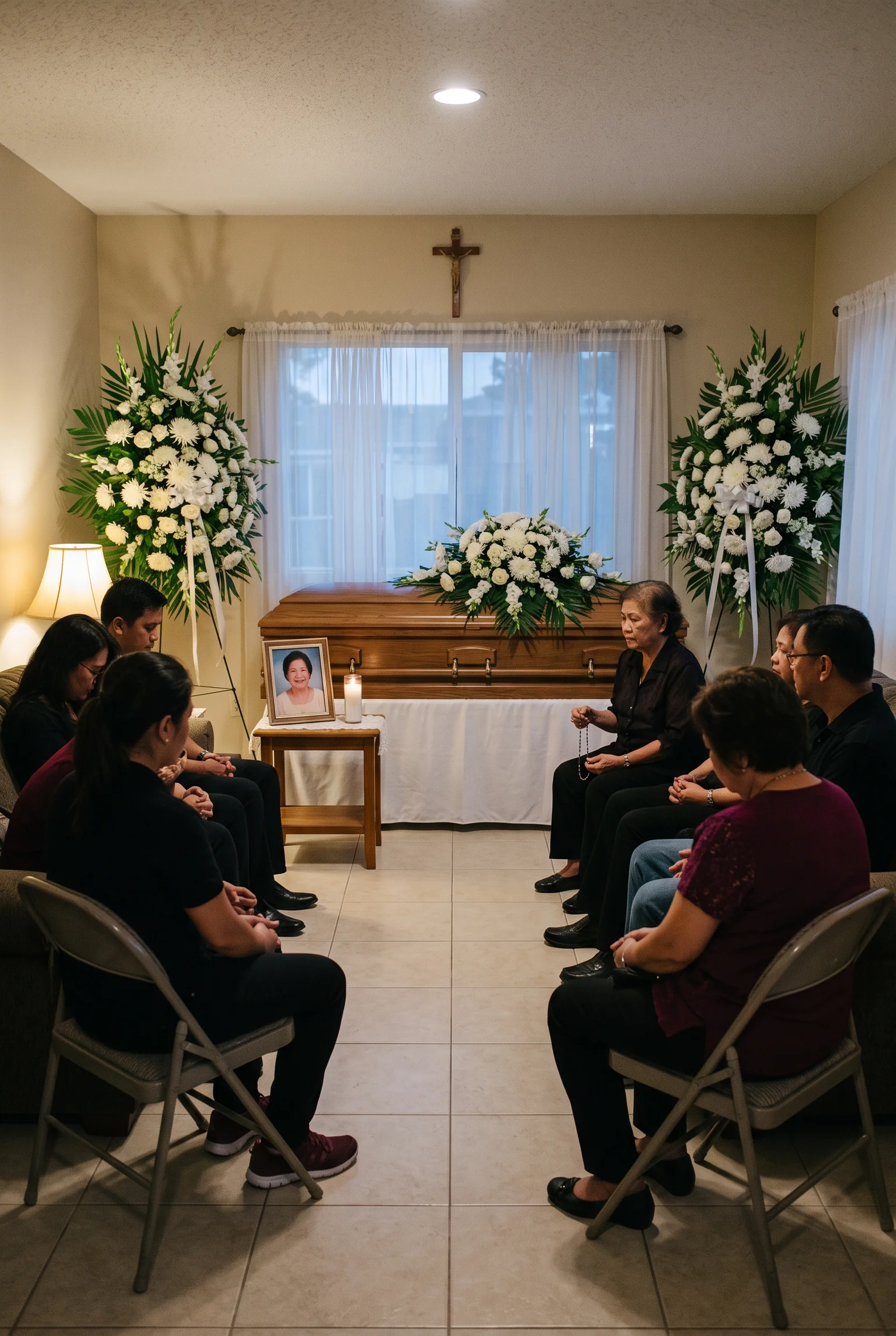
A Filipino wake is rarely a brief affair. The lamay can stretch three to seven nights, sometimes longer if relatives are traveling from the provinces or abroad, and during that time the home or funeral chapel becomes a place of constant visitors, prayer, and quiet grief. Mourning in the Philippines blends Catholic ritual, such as the funeral Mass and burial, with folk customs and communal vigils that unfold over days, not hours.
Flowers enter this space as something visible and lasting. They stand near the casket through the wake, travel with the family to the church, and often accompany the deceased to the memorial park, giving mourners a way to show respect, love, and solidarity with the grieving family, especially when words feel insufficient.
Choosing sympathy flower arrangements in the Philippines means understanding this longer, more layered timeline, not just picking something that looks appropriate. This guide covers the etiquette around sending flowers, which blooms and colors carry the right meaning, the arrangement types suited to different settings, and how to order with confidence when time is short.
Timing, custom, and who sends what
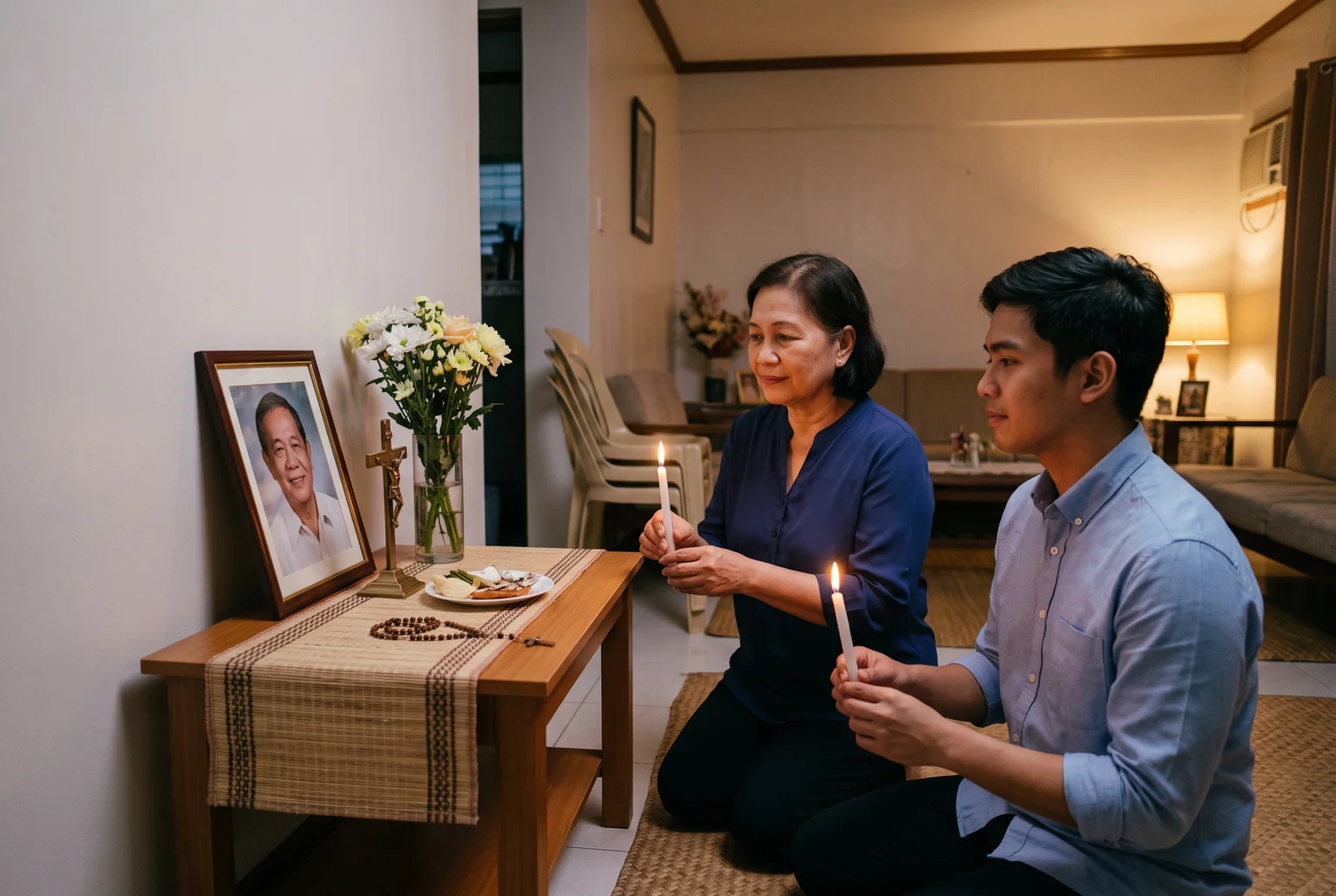
Sympathy flower arrangements in the Philippines can arrive at different points in a family’s mourning, and Filipino Catholic timelines run longer than a single viewing. The lamay is usually the first stop, followed by the funeral Mass and burial, and for many families the mourning continues with a nine-day novena, or pasiyam, often marked by shared rosary and a closing meal. Some families also observe a 40th-day gathering with Mass or communal prayer, tied in Catholic tradition to the Ascension.
There’s no single moment when flowers must arrive. Sending them for the wake or funeral is common, but arriving a few days later, once the immediate crowd has thinned out, can be just as meaningful, according to general sympathy etiquette guidance from the Emily Post Institute. What matters more is accuracy: confirm the deceased’s name and the venue with the funeral home or florist before the order goes out, since misdelivered flowers at a crowded wake cause real problems for grieving families.
Who sends what tends to follow relationships. Immediate family and close relatives often arrange larger pieces for the service itself, while colleagues, friends, and more distant relations lean toward smaller bouquets sent to the home. If the family has asked for donations instead of flowers, respecting that request matters more than any arrangement.
Restraint is the safer default. A modest arrangement with a sincere card says more than an oversized display that overwhelms a small chapel or crowded living room.
Which flowers and colors to send for sympathy arrangements in the Philippines
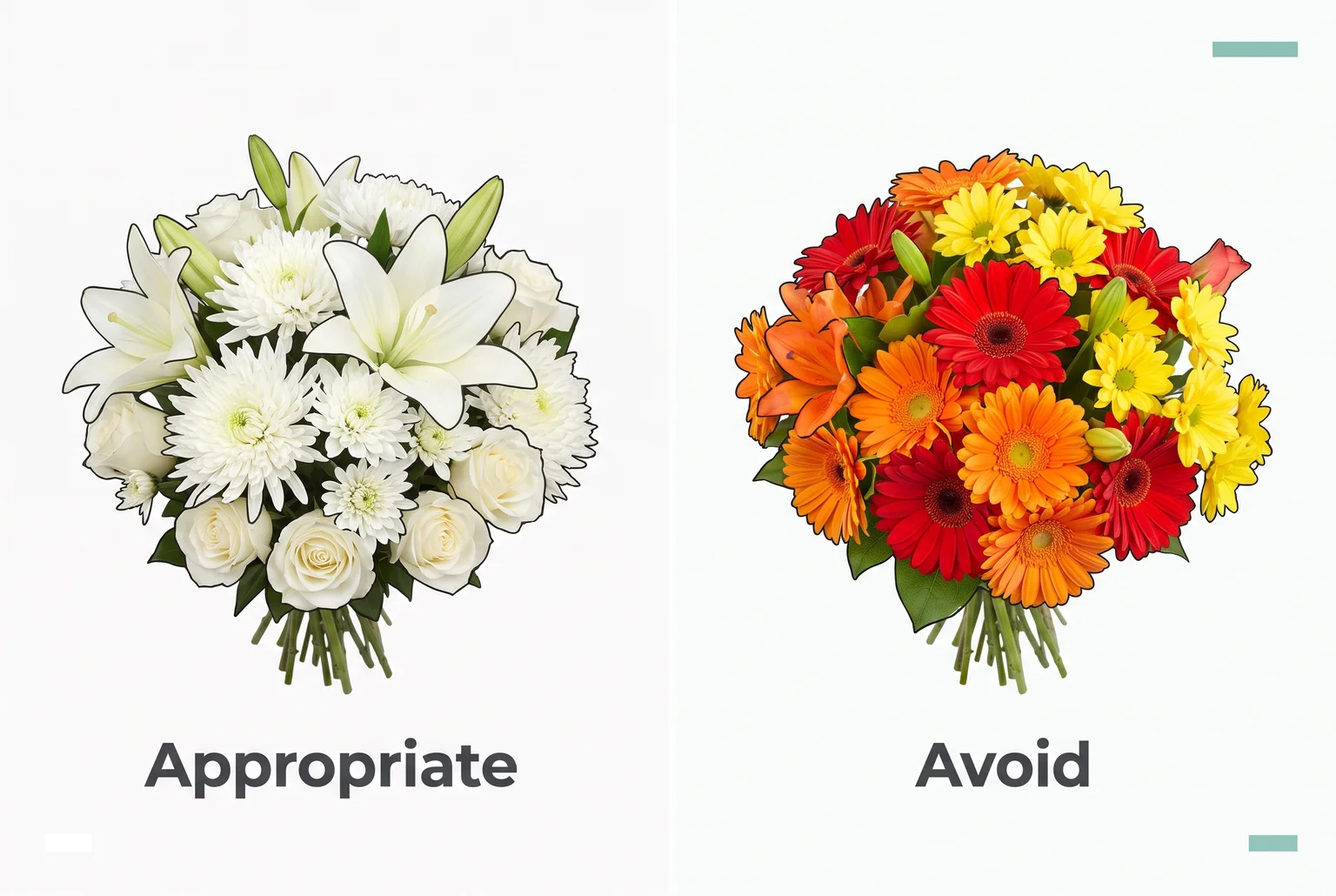
White dominates sympathy flower arrangements in the Philippines, and for good reason. White lilies, sometimes called azucena, are the flower most closely tied to Filipino funerals, carrying associations with purity and the soul’s restored innocence. White chrysanthemums and white roses round out the traditional trio, chosen because white reads as peace, remembrance, and respect rather than celebration.
This isn’t unique to the Philippines. White carries the same weight of purity and reverence in Western funeral floristry, and in Chinese tradition white flowers are tied directly to mourning and honoring the dead. Buddhist funeral customs lean the same direction, favoring white and yellow over anything bright, since those subdued tones suggest hope and purity without slipping into festivity.
If white feels too stark, ivory and pale pink are acceptable substitutes. Chrysanthemums, carnations, and orchids in light shades also work well and are common in wreaths, standing sprays, and smaller condolence pieces. What you want to avoid is anything saturated: bold red, orange, or vivid yellow can look like a birthday arrangement dropped into a wake by mistake.
 None of this is legally required etiquette. Some families, especially younger or more secular ones, don’t mind color. But when you’re unsure of the family’s preferences, white stays the safest, most universally understood choice.
Matching the arrangement to the venue
Sympathy flower arrangements in the Philippines come in enough formats that choosing the wrong one for the setting is easy to do without meaning to. Matching format to venue matters as much as color.
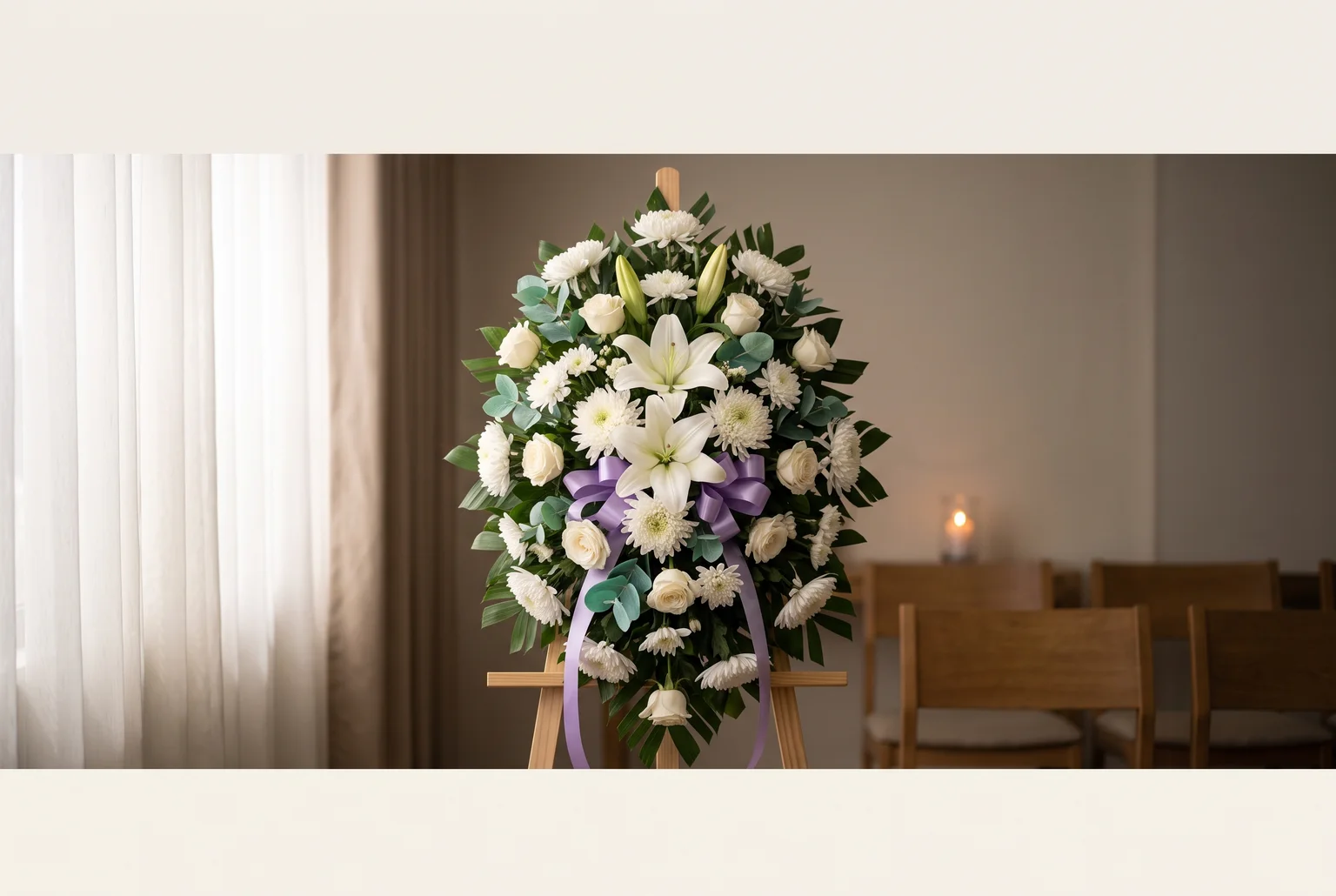
A standing spray mounted on an easel is the format most people picture at a wake: tall, one-sided, meant to be seen from a distance. These work well at church services too, since the upright shape stays visible from the pews. They come in one, two, or three-layered versions and as a two-piece funeral stand for larger displays flanking the casket. Some florists also offer a VIP stand, a more elaborate version for prominent tributes.
A wreath, the circular arrangement often tied to ideas of eternity, sits alongside standing sprays near the casket. Round or wreath-shaped designs also travel well to the grave once the wake ends, since they can be lifted off the easel and placed directly on the ground.
Casket sprays go directly on top of the coffin and are almost always chosen by the immediate family rather than outside senders. Cross-shaped and heart-shaped arrangements serve a similar role, placed near or on the casket as more personal, symbolic tributes.
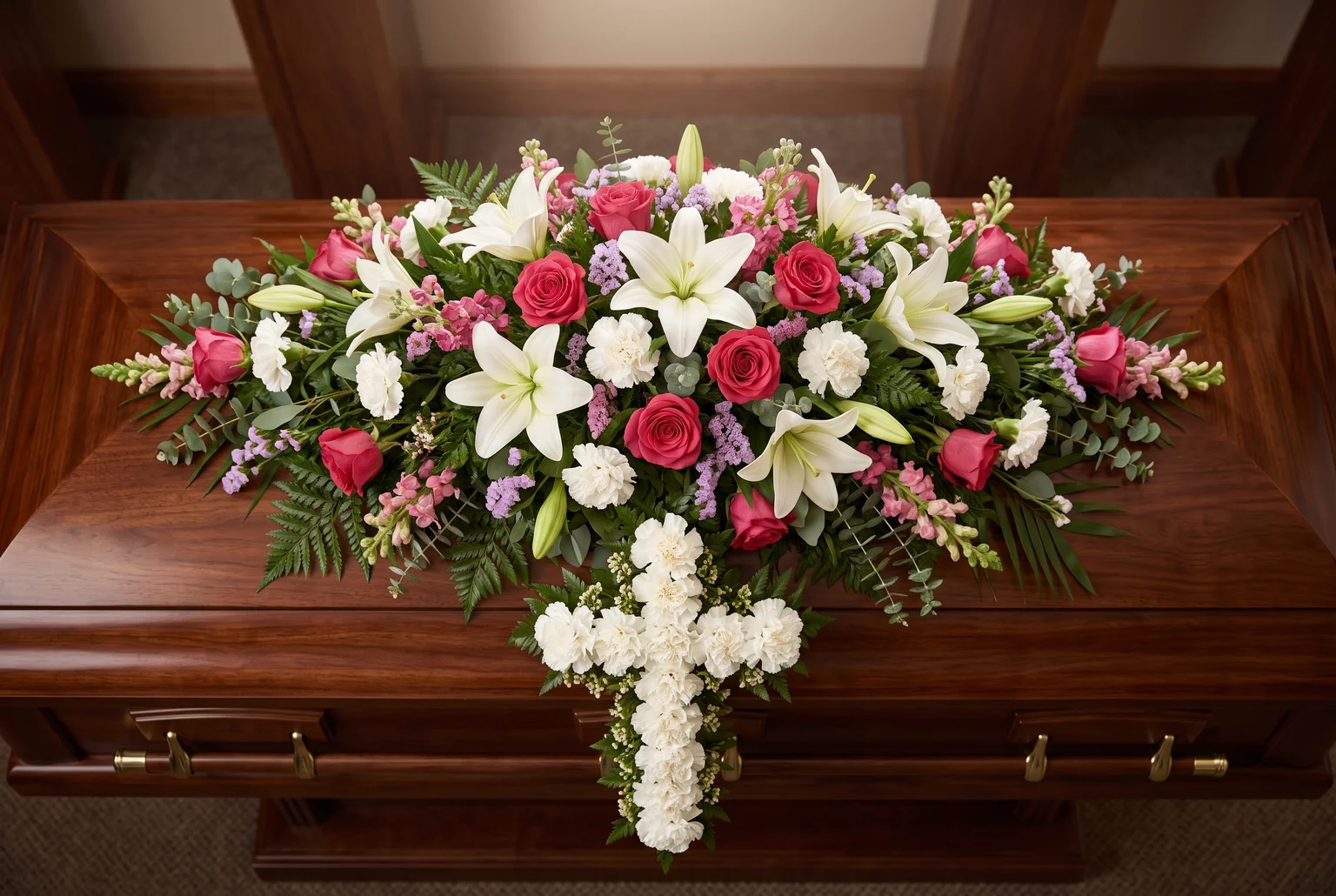
For anyone sending flowers to the family’s home rather than the wake itself, a bouquet, vase arrangement, box, or basket is more appropriate and less formal than an easel display. Baskets in particular give some flexibility, since they can go either to the wake venue or straight to the house. If the family opted for cremation, an urn arrangement designed to sit beside a smaller container is the closer fit. Some senders also choose funeral packages that pair flowers with food, spa items, or a hamper, useful when the goal is to support the grieving family beyond the flowers themselves.
When to send and how fast delivery needs to move
Most Catholic and Christian wakes in the Philippines run three to seven days between death and burial, giving family time to travel and prepare. That window is also the practical answer to “how soon should I send flowers.” Sending on the first or second day of the wake is safest, since it gives the family time to display the arrangement and lets latecomers still see it before burial. Filipino Muslim burials work differently, typically happening within 24 hours, so flowers meant for that setting need to move fast or go to the family’s home afterward instead.
Same-day delivery is most reliable in Metro Manila and nearby cities, with cutoffs commonly falling between noon and 4 PM Philippine time. Orders to provincial addresses often need a full extra day, and same-day service may not be available at all on Sundays, holidays, or peak dates like Valentine’s Day. Raphael’s funeral and sympathy flower delivery covers Metro Manila and provincial destinations, though exact cutoff times and coverage for a specific address are worth confirming directly.

For OFWs and relatives abroad, ordering online means entering the wake or funeral venue, a local contact number, and the delivery date at checkout, then settling payment separately if needed. Time zone differences make it easy to miscalculate Philippine-time cutoffs, so confirming order status before assuming it went through matters more than it might for a routine bouquet.
Placing the order without second-guessing every step
Ordering sympathy flowers online generally follows the same sequence wherever you shop: pick the arrangement type (bouquet, standing spray, wreath, or a casket piece), choose size and color preferences, then enter delivery details and a card message before paying. On Raphael’s site, that means selecting from the funeral and sympathy category, confirming the wake or church venue’s exact address, and adding a local contact number the florist can call if the location is hard to find.
The card message is often the part people freeze on. Keep it short and specific. A line like “I was so sorry to hear about [Name]” or “Please accept my sympathy” says enough. Avoid clichés like “I know how you feel,” and skip unsolicited advice. Close simply: “With sympathy” or “Wishing you peace” both work. If unsure what’s appropriate for a Filipino wake, Raphael’s funeral flower FAQ covers common questions on timing and etiquette.
After payment, you’ll get a confirmation with an order number, worth keeping in case you need to follow up on delivery status.

Sending sympathy flowers when it matters most
Choosing the right sympathy flower arrangement in the Philippines is one small way to stand with a grieving family when there’s little else to offer. Whether it’s a modest bouquet for a home wake, a standing spray for the church, or a wreath for the memorial park, the arrangement should speak quietly and respectfully on your behalf.
Raphael’s Flowers & Gifts offers free same-day delivery within Metro Manila for orders placed before 4:00 PM on weekdays or 10:00 AM on Saturdays, with nationwide delivery to most other cities in the Philippines. If the wake is already underway and time is short, that cutoff matters.
Browse the funeral and sympathy collection and place your order with Raphael’s today.

