

Contents
- Sending flowers when someone has died
- What a Filipino wake actually looks like
- What flowers and colors are traditionally understood to mean
- Choosing between wreaths, sprays, and bouquets
- Timing, wording, and what not to say
- Getting flowers to the right place at the right time
- Choosing flowers with care, not pressure
Sending flowers when someone has died
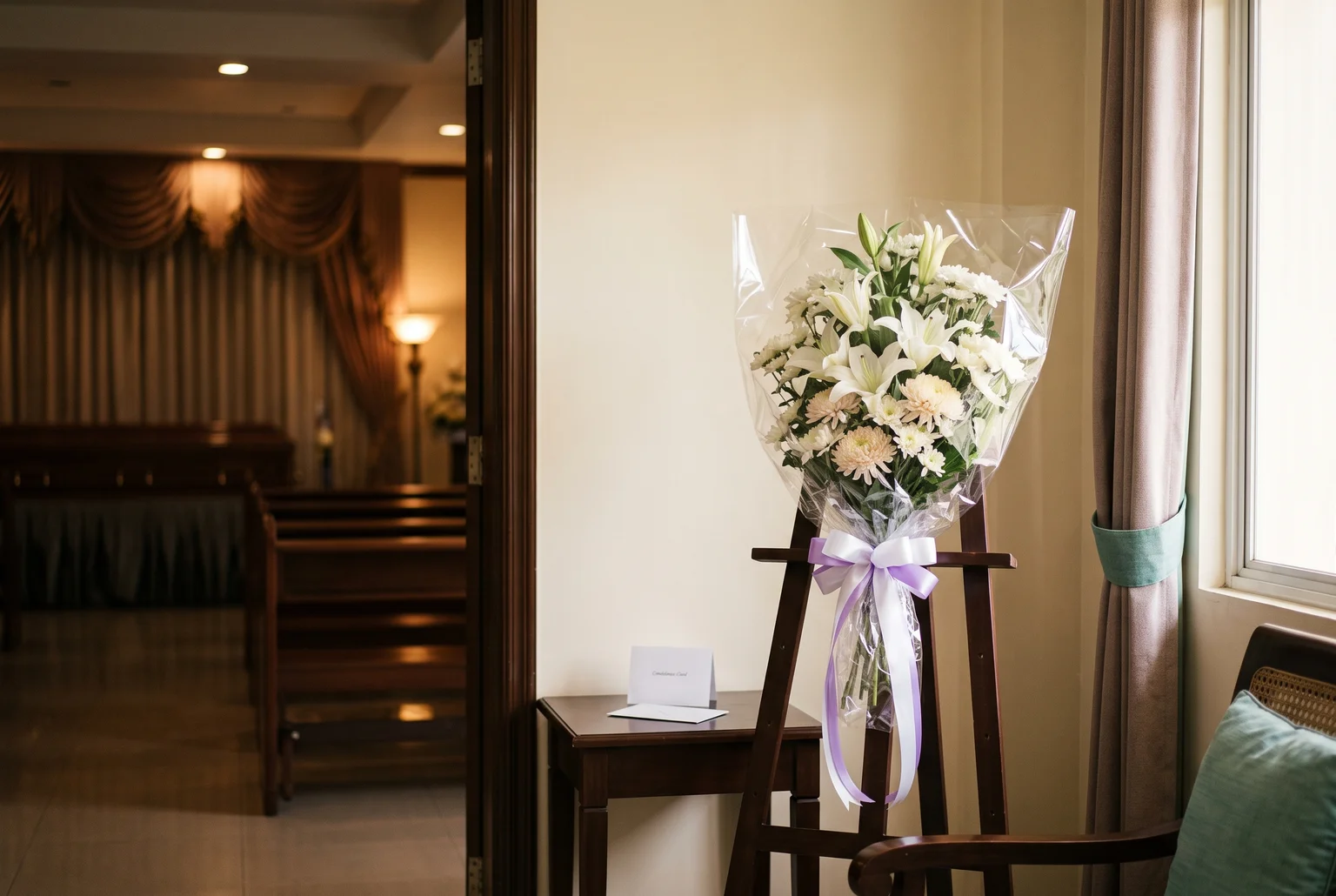
Losing a family member or close friend brings a specific kind of disruption. Decisions have to be made quickly, often while people are still in shock: where to hold the wake, who to notify, what to wear, what to send. Flowers are one of the smaller decisions in that list, but they carry weight. In the Philippines, a floral tribute at the lamay or funeral mass is a visible, immediate way of showing that you are thinking of the family, even when you cannot say much else.
This guide is meant to help with that one decision. It walks through the customs behind Filipino wakes and funerals, what different flowers and colors are traditionally understood to mean, the difference between wreaths, standing sprays, and hand-tied bouquets, and how to handle timing and delivery so your flowers arrive when they’re actually useful to the family, not after the fact.
None of this is meant to add pressure. Grief already asks enough of people. The goal here is simply to make one part of it easier to get right.
What a Filipino wake actually looks like
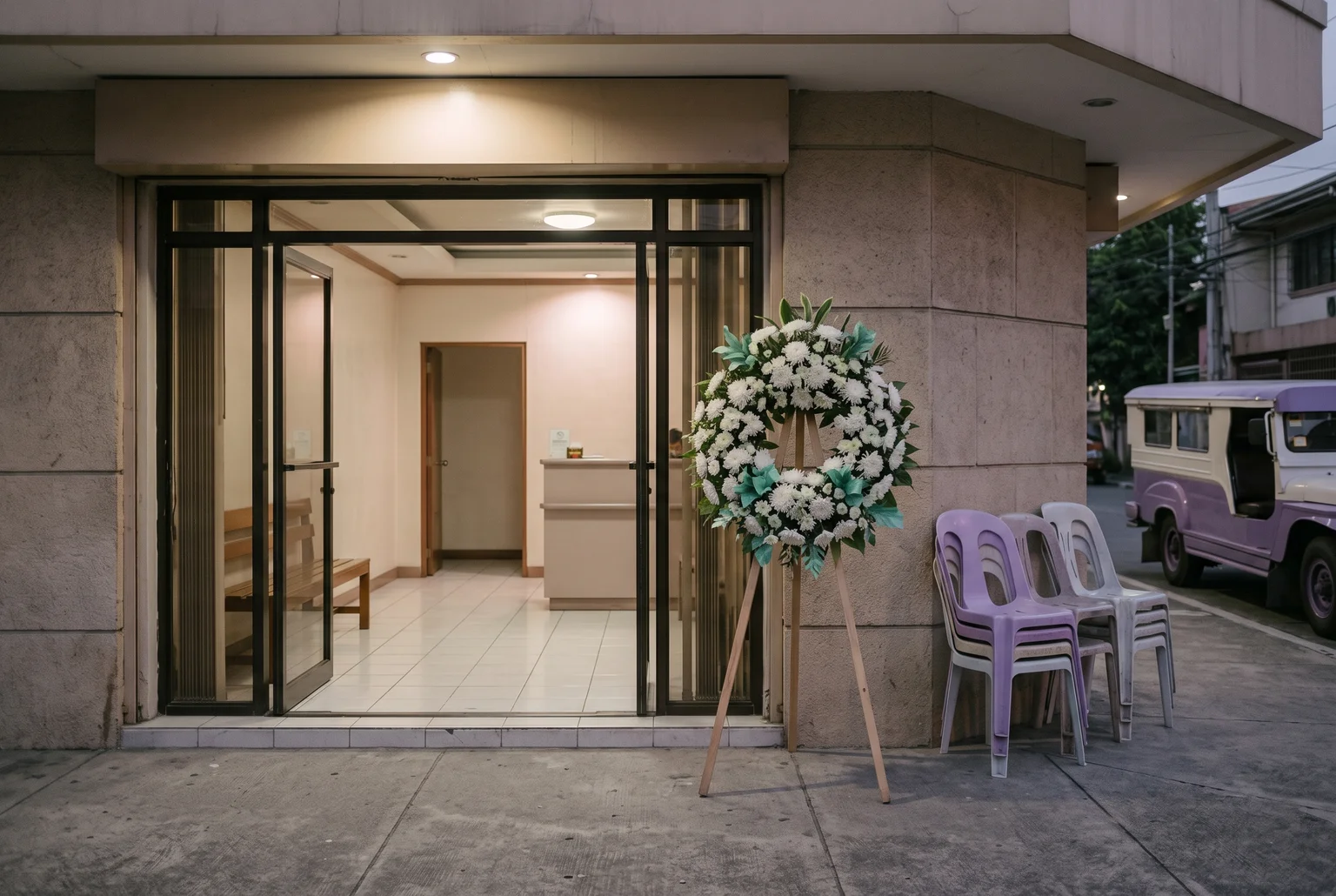
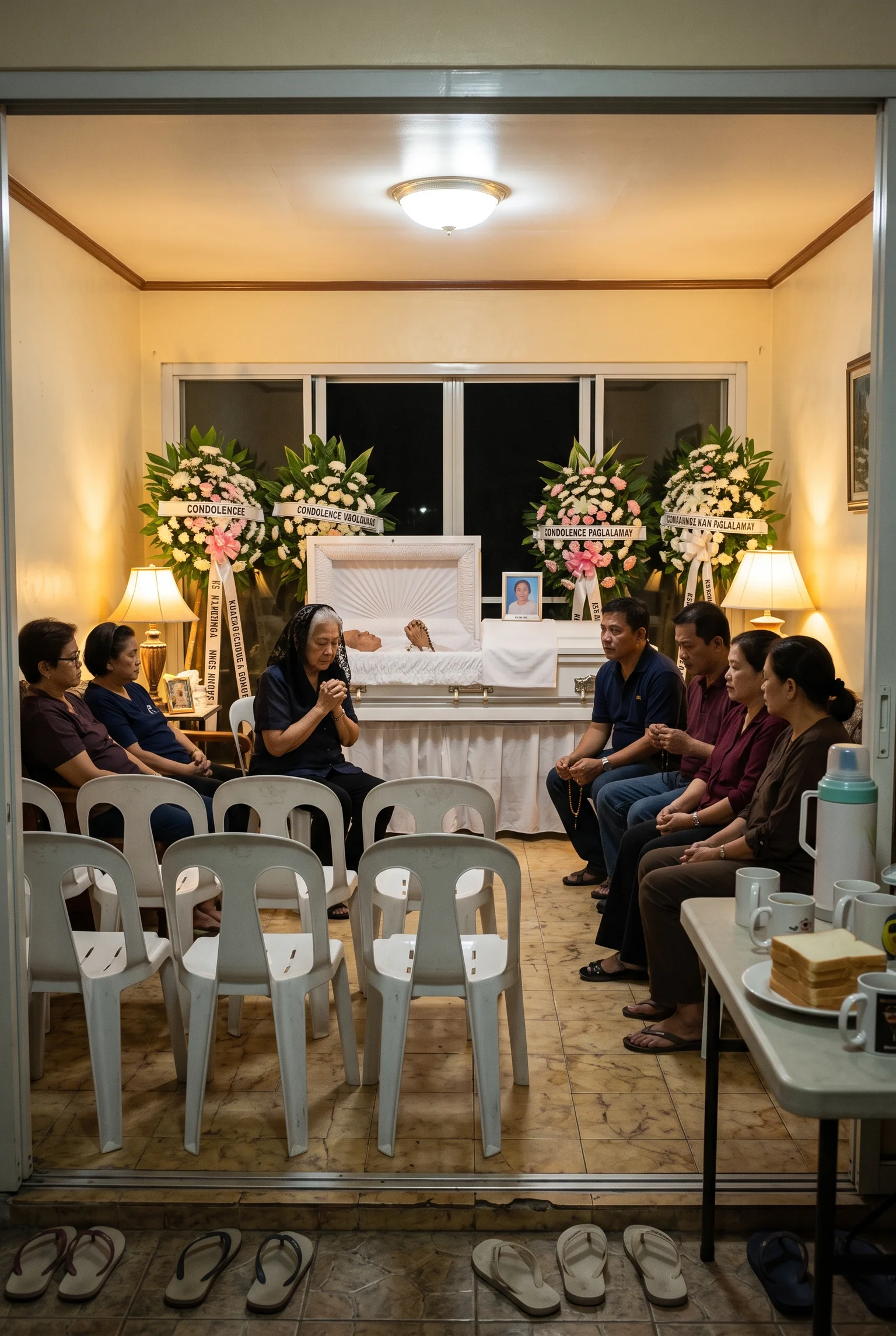
The lamay is the center of Filipino mourning. Traditionally held in the family home, with the coffin placed in the living room or another central space, a wake in the Philippines typically runs three to seven days, sometimes longer if relatives are flying in from abroad. This stretch of time is not a formality. It exists so that everyone who needs to pay respects, from immediate family to distant cousins to coworkers, has a chance to show up.
Wakes are communal by design. Visitors arrive at all hours, including late at night, and often stay to talk, share food, or simply sit with the family. It is common for people to bring money to help with funeral costs, an informal but widely practiced form of support. Prayer is woven through all of it: rosaries, novenas, and other Catholic devotions are said over the days leading up to burial, particularly in Catholic households, which make up the majority but not the whole of the country.
The Catholic funeral itself, where practiced, follows a broader structure known as the Order of Christian Funerals: a vigil, a funeral liturgy (usually a Mass), and a rite of committal at the grave, according to the USCCB’s overview of Catholic funeral rites. The vigil, the USCCB notes, is when the community keeps watch with the family in prayer, which lines up closely with how the lamay functions in practice.
Not every Filipino family observes these customs the same way. Protestant, Muslim, Iglesia ni Cristo, and non-religious households follow their own practices, and even among Catholics, how strictly the rites are followed varies by region and family.
What flowers and colors are traditionally understood to mean
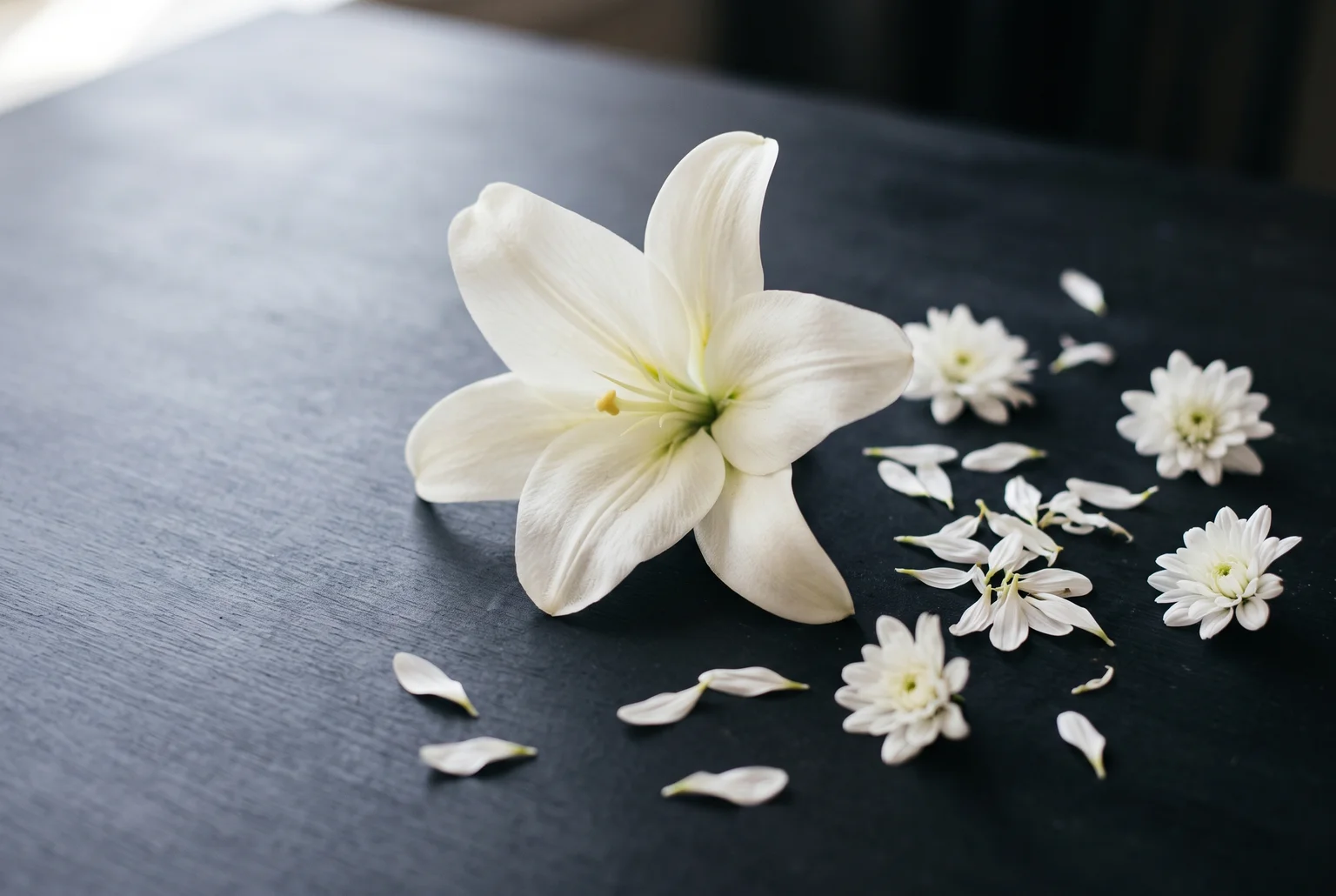
White lilies are the flower most associated with Filipino funerals, and the association has old roots. In Christian art, the lily was tied to the Virgin Mary and became a symbol of purity and chastity, and by extension, purity, innocence, spiritual grace, and rebirth in a broader Christian and funerary context. At a wake or funeral, a white lily is often read as a wish for the departed’s soul to rest in peace, though this is a cultural convention built up over centuries, not a fixed rule anyone is bound to follow.
Chrysanthemums and roses show up often in Philippine funeral arrangements too, usually in white or soft pastel shades. Their meanings tend to shift depending on who you ask and which flower guide they’re reading, so it’s worth treating any specific claim about them (mourning, nobility, remembrance) as a general impression rather than settled fact.
Color carries more consistent weight than any single flower. White and pale tones (soft pink, cream, pale yellow) are the safest choice across most Filipino households, echoing the black-and-white mourning attire still common at many wakes, per Wikipedia’s overview of Philippine funeral customs. Ilocano and Chinese-Filipino families, in particular, have long worn white rather than black as their mourning color. Bright reds, oranges, or overly festive color combinations are usually avoided, since they can read as celebratory rather than solemn.
Choosing between wreaths, sprays, and bouquets
At most Philippine wakes, floral tributes cluster around the casket in a fairly predictable arrangement, and knowing what each type means helps you pick one that fits your relationship to the deceased.
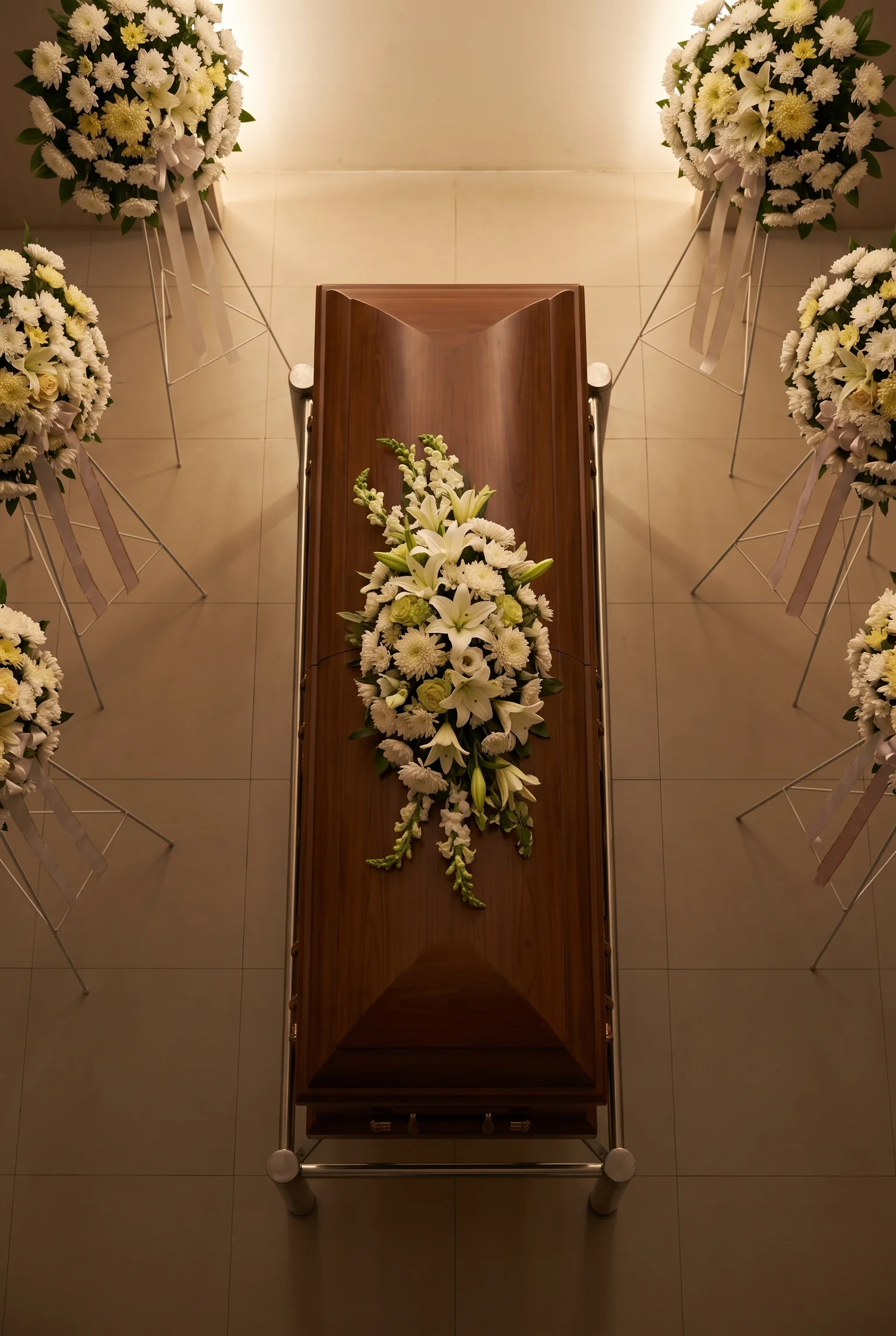
Standing sprays are tall, upright arrangements displayed on a metal stand or easel, usually placed near the casket, the altar, or the chapel entrance where mourners will see them. They are typically sent by close friends, extended family, coworkers, or organizations rather than immediate family, and in Filipino wakes they often double as a visible marker of who came to pay respects and how prominently their tribute is displayed.
Wreaths are the circular arrangements you’ll see propped on easels behind or beside the casket. Their round shape is generally read as a symbol of eternal life and the unbroken cycle of existence. Extended family, friends, church groups, and employers commonly send these, and some families keep one afterward as a lasting memorial rather than letting it wilt at the venue.
Casket sprays sit directly on the casket lid (or cover half of it, for an open-casket viewing), and are almost always chosen by immediate family: a spouse, parent, or child.
Sympathy bouquets, smaller vase or basket arrangements, are the right choice for friends, distant relatives, or coworkers sending something to the wake or the family home rather than to the casket itself. Raphael’s Gifts groups these under its sympathy and funeral flowers category for browsing by size and price.
Timing, wording, and what not to say
Standing sprays and wreaths should reach the funeral home or chapel well before the wake begins, ideally one to two hours ahead, so staff have time to set them up around the casket. Sympathy bouquets sent to the family’s home are more forgiving. They can arrive during the wake, right after the burial, or even one to two weeks later, when visitors have thinned out and the household could use a quiet reminder that people are still thinking of them.
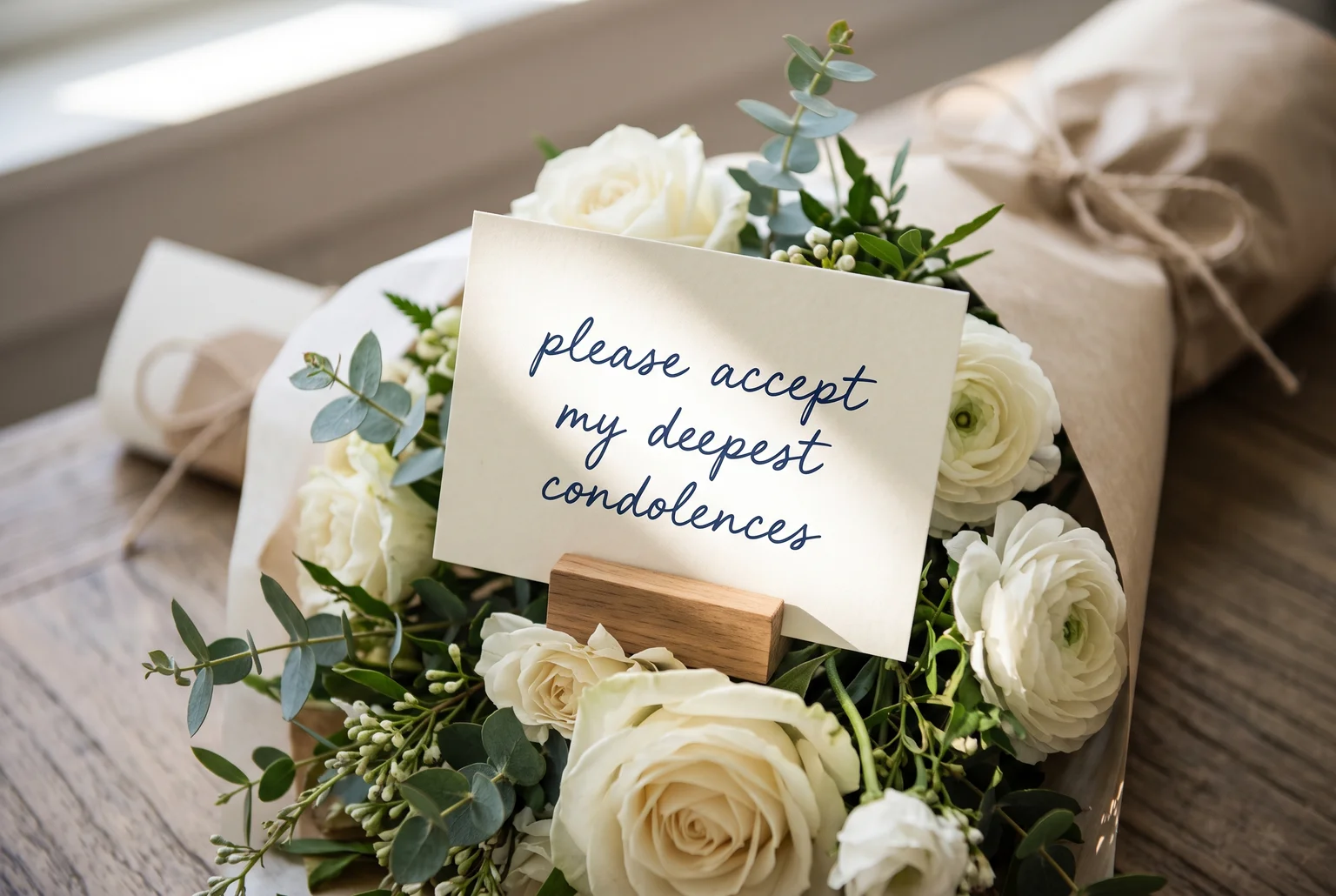
The card matters as much as the flowers. Keep it short and sincere. “I am so sorry for your loss” or “Please accept my deepest condolences” cover most situations without sounding rehearsed. If you knew the family well, something like “With heartfelt sympathy, thinking of you and your family” works better than generic phrasing borrowed from a template. Raphael’s Gifts has a short FAQ on writing sympathy card messages if you want more phrasing options.
Avoid advice-giving lines like “everything happens for a reason” or “time heals all wounds.” Grief does not run on a schedule, and phrases that rush someone through it tend to land badly, even when well meant. A simple acknowledgment of the loss, without trying to fix how the person feels, is what most grief resources recommend, and it is usually what the family actually wants to read.
Getting flowers to the right place at the right time
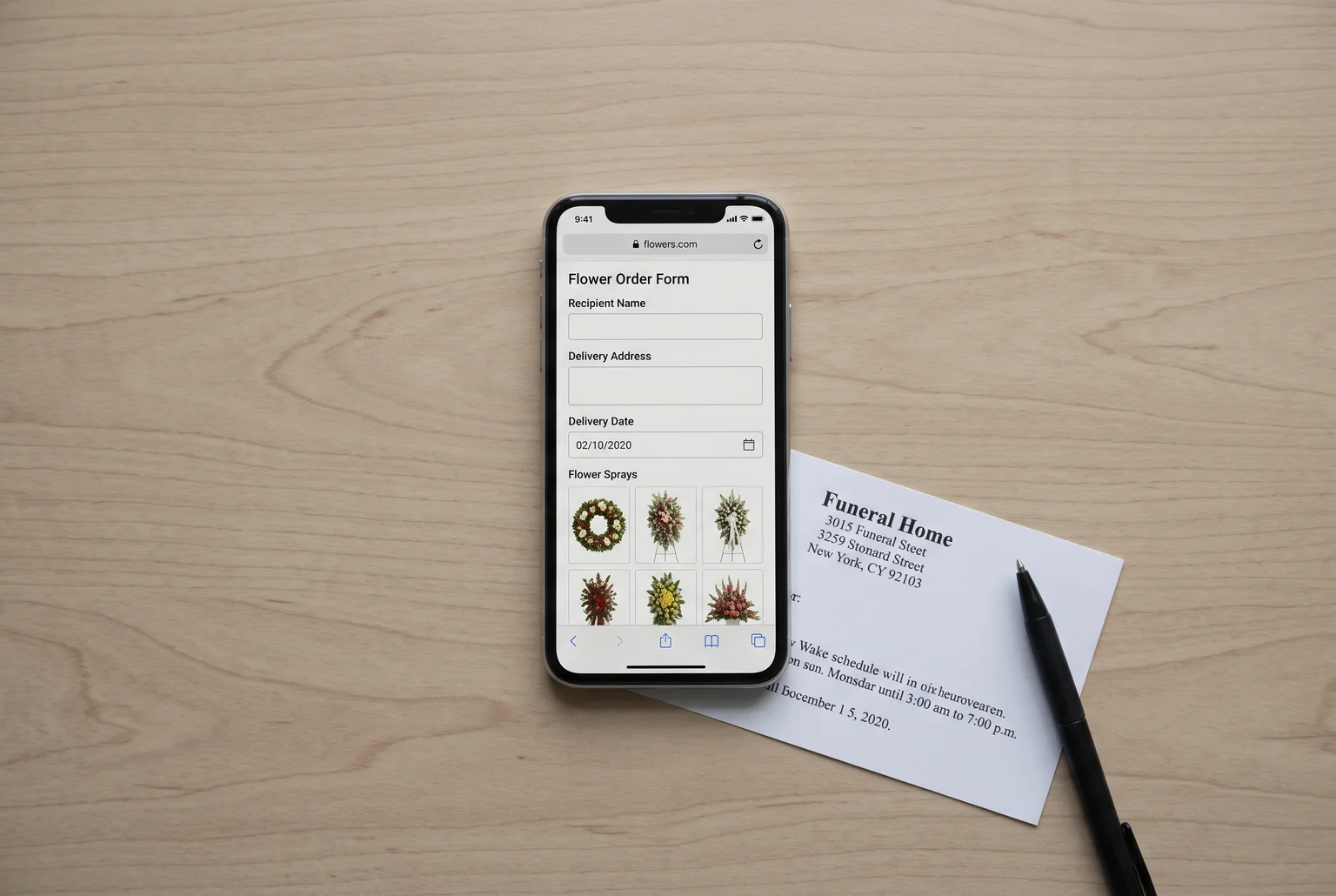
Confirm the exact venue before ordering. Wakes move between funeral homes, chapels, and family homes over several days in the Philippines, and a delivery aimed at the wrong address on the wrong day is a common, avoidable mistake. Get the full name of the deceased, the chapel or memorial park, and the specific room or floor number if it’s a larger funeral home. Raphael’s Gifts lists its sympathy and funeral arrangements with delivery details on its funeral flowers category page, and its delivery FAQ covers coverage areas and cutoff times for same-day requests.
If you’re sending from abroad, the flowers themselves are usually the easier part. Nationwide delivery within the Philippines is fairly standard now, even to provincial towns, though it’s worth confirming timing directly with the florist rather than assuming big-city turnaround applies everywhere.
Separately, if the death happened overseas and the family needs official paperwork, that’s a different process from flower delivery. A Filipino’s death abroad has to be reported to the Philippine Foreign Service Post with jurisdiction over that location, and only that post can process the Report of Death. Once the record reaches the PSA, family members can order a certified death certificate online through PSAHelpline, selecting international delivery if needed and completing identity verification before the certificate is released.
Choosing flowers with care, not pressure
Sending flowers for a Filipino wake or funeral comes down to a few simple habits: knowing roughly what the family expects at that stage of mourning, choosing white or pale-toned blooms like lilies, chrysanthemums, or roses unless told otherwise, and matching the arrangement (wreath, standing spray, or bouquet) to where it will actually be placed. None of this requires expertise, just attention.
If you’d rather see the options than guess, Raphael’s Gifts keeps a dedicated sympathy and funeral flowers collection with arrangements suited to wakes, chapels, and memorial services across the Philippines. Take your time with it. There’s no rush in choosing something respectful.

