

Contents
- When Is Mother’s Day in the Philippines? 2026 Date, Meaning, and Gift Ideas
- When Is Mother’s Day in the Philippines in 2026?
- Quick Context: Mother’s Day Philippines Today
- Why Filipinos Celebrate Mother’s Day With the Whole Family
- History: First Monday of December Versus Second Sunday of May
- Legal Status: Is Mother’s Day a Public Holiday?
- Traditional Mother’s Day Flower: Carnation
- Traditions and Celebrations: Mother’s Day in Filipino Culture
- Mother’s Day and Father’s Day Date Comparisons
- Practical Guide: Celebrating Mother’s Day for the Whole Family
- Best Mother’s Day Gift Ideas in the Philippines
- Best Flowers to Send for Mother’s Day
- When Should You Order Mother’s Day Flowers?
- Expressing Love: Gifts, Gestures, and Words
- Where to Buy Gifts and Flowers in the Philippines
- FAQs About Mother’s Day in the Philippines
- Summary and Key Dates to Remember
When Is Mother’s Day in the Philippines? 2026 Date, Meaning, and Gift Ideas
When Is Mother’s Day in the Philippines in 2026?
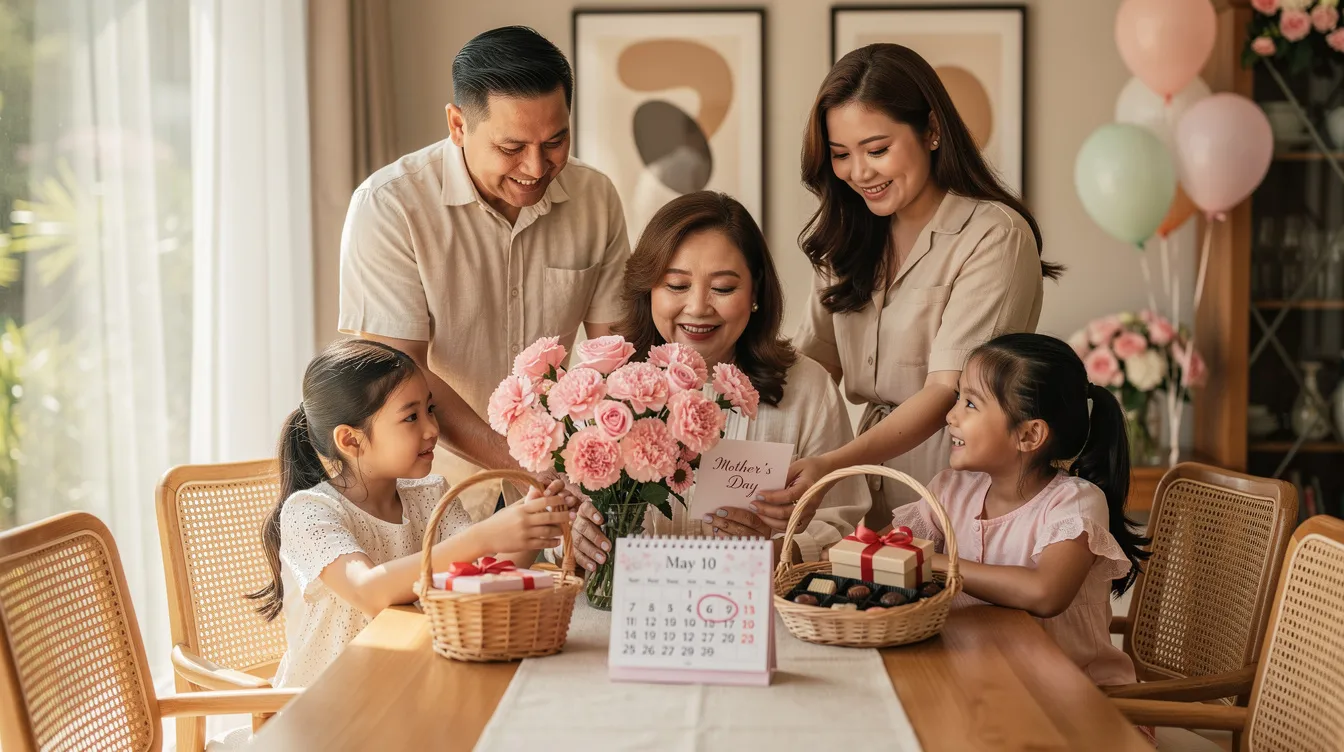
Mother’s Day in the Philippines in 2026 falls on Sunday, May 10, 2026. For most Filipino families, the answer to “when is mother’s day in the Philippines” is simple: it is commonly observed on the second Sunday of May, following the popular date used in the United States and many other countries. That means searches like “when is mothers day in Philippines,” “mother’s day 2026 Philippines,” “mother’s day 2026 date Philippines,” and “Philippines mother’s day 2026” all point to the same practical answer for gift planning this year: May 10, 2026.
That date matters because Mother’s Day is one of the busiest flower and gift-giving occasions of the year. If you want to celebrate Mother’s Day with fresh flowers, chocolates, gift baskets, stuffed toys, or a heartfelt surprise delivered to Mom’s home, workplace, or family gathering, planning early helps you get the best selection. This is especially true for overseas Filipinos who want to send love from abroad and for local family members preparing a full on celebration at home.
Quick Context: Mother’s Day Philippines Today
In everyday Filipino life, Mother’s Day Philippines celebrations are widely observed across Luzon, Visayas, and Mindanao. While it is not a traditional Filipino holiday in the same sense as Christmas, Holy Week, or fiestas, it has become deeply meaningful because it fits naturally with Filipino culture: close family ties, respect for parents, gratitude toward elders, and the idea of mothers as the heart of the home.
The Philippines’ modern observance has a strong American tradition behind it. The U.S. version of Mother’s Day became associated with the second Sunday of May through Anna Jarvis and later national recognition in the United States, and the National Park Service notes that Jarvis was a key advocate for the holiday now commemorated annually on that date in the U.S. (National Park Service) In the Philippines, a local government explainer also notes that the occasion owes much of its popularity to American Colonial Period influence, while Mother’s Day is officially celebrated on the second Sunday of May but is not a public holiday. (Gerona Tarlac)
The result is such a diverse mix of global cultures and Filipino tradition. A quick Google search may show Mothering Sunday in the United Kingdom, International Women’s Day in some countries, a first Sunday observance in other places, or a fourth Sunday in Lent for older Christian traditions. But for most families asking about Mother’s Day in the Philippines, the common celebration date remains the second Sunday of May.
Why Filipinos Celebrate Mother’s Day With the Whole Family
Mother’s Day is a big deal in the Philippines because the celebration honoring mothers is rarely limited to one person giving one gift. It often becomes a whole family event involving siblings, fathers, grandchildren, cousins, and even neighbors who grew up close to the family. Most families see the day as an opportunity to honor mothers, grandmothers, aunts, godmothers, mothers-in-law, and other women who helped raise, guide, protect, and comfort the family.
In many Filipino homes, mothers are lovingly called the ilaw ng tahanan, or the light of the house. The phrase captures the warmth, sacrifice, patience, and shining guidance mothers bring to daily family life. It also explains why Mother’s Day is not only about giving a popular Mother’s Day gift. It is about expressing love, respect, and gratitude for the women who keep the family connected through ordinary days, difficult seasons, and joyful milestones.
This is why Mother’s Day celebrations in urban areas and provinces alike may include lunch out, Sunday Mass, a family video call, home-cooked dishes, fresh bouquets on the dining table, and handwritten notes from children. For overseas Filipinos, the day in the Philippines can feel especially emotional because sending flowers, cakes, or gift baskets becomes a way to bridge distance and bring Filipino tradition into a mother’s home even when a son or daughter cannot be there in person.
History: First Monday of December Versus Second Sunday of May
The history of Mother’s Day in the Philippines is more layered than many people realize. The traditional date was not always the second Sunday of May. In 1921, during the period of American colonialism, the Ilocos Norte Federation of Women’s Clubs asked that the first Monday of December be declared Mother’s Day. According to a 2008 Philippine News Agency account summarized by the Municipality of Gerona, the women’s clubs asked for a day “to honor these fabulous women who brought forth God’s children into this world,” and Governor-General Charles Yeater responded through Circular No. 33, which declared the celebration. (Gerona Tarlac)
In 1937, President Manuel L. Quezon issued Presidential Proclamation No. 213, changing Mother’s Day into Parent’s Day because there were petitions for a Father’s Day and he considered it more fitting to honor both parents together. Lawphil’s text of Proclamation No. 213 identifies the first Monday in December as the date and reflects Quezon’s move toward a combined parents’ observance. (LawPhil) This is why the phrase presidential proclamation no often appears in discussions about changing Mother’s Day in the Philippines.
The date shifted again under President Ferdinand Marcos. In 1980, President Ferdinand Marcos signed Proclamation No. 2037, which declared the first Sunday of December as Father’s Day and the first Monday of December as Mother’s Day. A Philippine Senate issuances listing summarizes Proclamation No. 2037 as declaring the first Sunday and first Monday of December every year as Father’s Day and Mother’s Day, respectively. (Issuances Library) In other words, former President Ferdinand Marcos preserved the December-based structure but separated Father’s Day and Mother’s Day within the same month.
Then came the 1988 change that most Filipinos recognize today. President Corazon Aquino issued Proclamation No. 266, declaring every second Sunday of May as Mother’s Day and every third Sunday of June as Father’s Day in the Philippines. (LawPhil) Put simply, President Cory Aquino changed the common date to match the American tradition more closely. Some summaries phrase it as “the next president Cory Aquino changed the date,” but the full official name to remember is President Corazon Aquino.
The final major twist came in 1998, when President Joseph Estrada returned both celebrations to the first Monday of December through Proclamation No. 58. Lawphil’s 1998 proclamation listing identifies Proclamation No. 58 as declaring the first Monday of December every year as Mother’s Day and Father’s Day. (LawPhil) Former President Joseph Estrada’s change created the legal ambiguity people still discuss today: common practice follows May for Mother’s Day and June for Father’s Day, while older proclamations point back to December.
Legal Status: Is Mother’s Day a Public Holiday?
Mother’s Day is widely celebrated in the Philippines, but it is not an official public holiday in the usual workplace and government-calendar sense. The distinction matters. A date can be culturally important, commercially busy, and socially meaningful without being a public holiday that automatically gives workers a paid day off or changes regular business schedules.
The most practical answer is this: Mother’s Day is popularly and commonly observed on the second Sunday of May, but it is not treated like Labor Day, Independence Day, Christmas Day, or other national holidays. For the 2026 calendar, Proclamation No. 1006 declared the regular holidays and special non-working days for the year, and public holiday lists based on that proclamation do not treat Mother’s Day as a regular or special non-working public holiday. (Presidential Communications Office)
Because of the historical proclamations, readers may still encounter claims that the legal traditional date is the first Monday of December. That is why it is wise to check the Official Gazette, current government proclamations, and workplace policies if you need an official ruling for leave, payroll, school activities, or company scheduling. For everyday family planning, however, most Filipinos celebrate Mother’s Day on the second Sunday of May, and in 2026 that means May 10.
Traditional Mother’s Day Flower: Carnation
The traditional Mother’s Day flower is the carnation. In Mother’s Day symbolism, carnations are associated with purity, sweetness, endurance, devotion, and a mother’s lasting love. The Smithsonian American Women’s History Museum notes that Anna Jarvis chose white carnations as an emblem of Mother’s Day and encouraged heartfelt letters of gratitude to mothers. (Smithsonian Women’s History Museum) That connection helped carnations become one of the most recognizable flowers for Mother’s Day across global cultures.
In the Philippines, the traditional symbolism is often explained through color. Pink carnations are commonly used to honor living mothers because they express affection, gratitude, warmth, and admiration. White carnations are used to honor mothers who have passed away, especially in remembrance. Older accounts say school children once wore pink carnations, also referred to as cadena de amor, on Mother’s Day, while children whose mothers had died would wear white carnations. This custom gave the flower a tender emotional meaning that went beyond decoration.
Today, not every family gives carnations specifically. Many choose roses, lilies, tulips, orchids, sunflowers, mixed flowers, or elaborate bouquets arranged in boxes, baskets, or vases. Still, carnations remain meaningful because they connect the modern celebration to older traditions. If your mother appreciates symbolism, a bouquet with pink carnations can be a gentle way to say, “Thank you for your love.” If you want to remember a mother who has passed, white carnations offer a quiet and respectful tribute.
Traditions and Celebrations: Mother’s Day in Filipino Culture
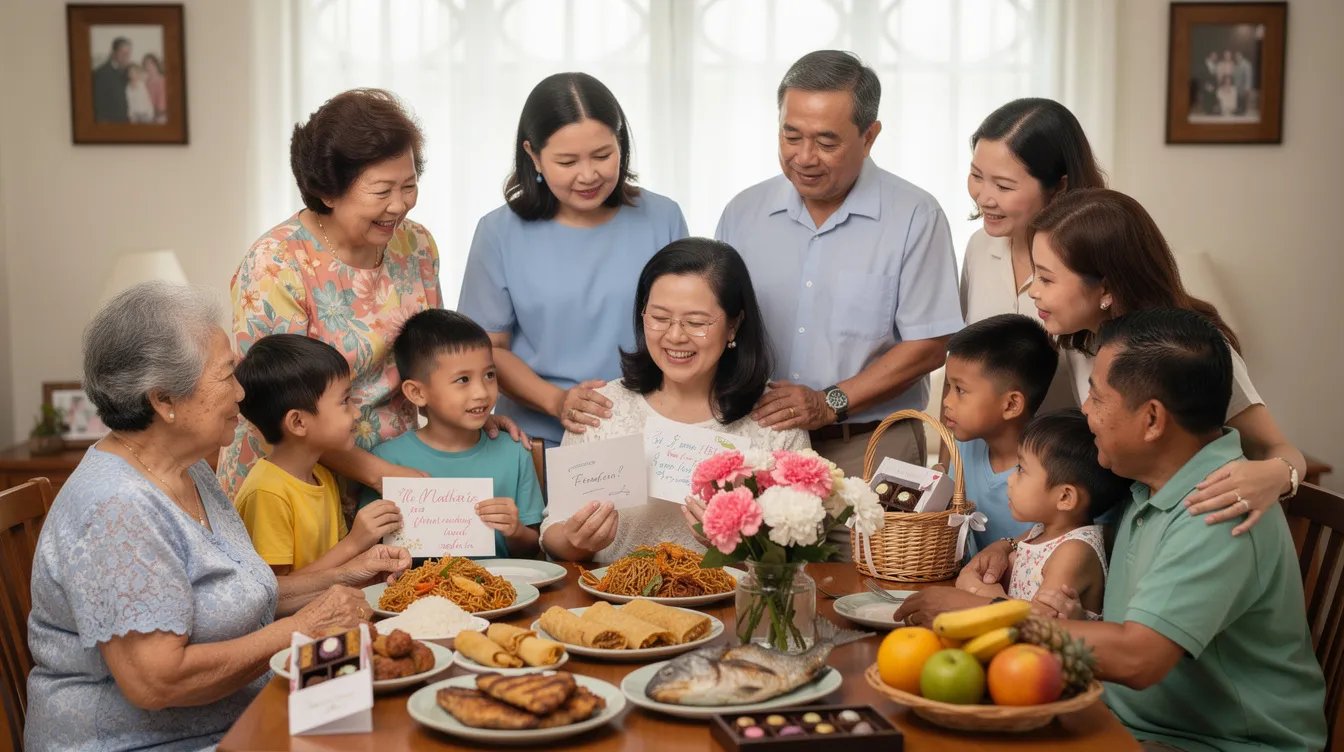
Mother’s Day celebrations in the Philippines are often home-centered. Many families prepare traditional Filipino dishes, gather around the table, and let Mom rest while others cook, serve, and clean. Favorite meals may include pancit for long life, adobo, kare-kare, grilled seafood, lumpia, lechon kawali, or the dish Mom loves most. Some families go out to restaurants, but a home-cooked meal can feel more personal because it allows family members to recreate the comfort Mom has given them for years.
Celebrations also extend to grandmothers, aunts, stepmothers, mothers-in-law, single mothers, and other women who became mother figures. Filipino culture often recognizes care through relationship rather than title alone. A tita who helped raise nieces and nephews, a lola who watched the children while parents worked, or an older sister who carried family responsibilities may also be honored. Mother’s Day becomes a family occasion that recognizes the many forms of maternal care.
Gift-giving is another strong part of Mother’s Day Philippines celebrations. Filipinos often give fresh flowers, chocolates, jewelry, cakes, fruit baskets, spa sets, handwritten cards, and meaningful keepsakes. For many mothers, though, the best gift is still time: a visit, a meal together, a long phone call, a prayer, a sincere hug, or a simple message saying that her sacrifices were seen and appreciated.
Mother’s Day and Father’s Day Date Comparisons
Mother’s Day and Father’s Day have an interesting shared history in the Philippines. The two occasions were merged, separated, and merged again through different proclamations. Under Quezon’s 1937 Proclamation No. 213, Mother’s Day became Parent’s Day on the first Monday of December. Under Marcos in 1980, Father’s Day and Mother’s Day were separately identified on the first Sunday and first Monday of December. Under Corazon Aquino in 1988, Mother’s Day moved to the second Sunday of May while Father’s Day moved to the third Sunday of June. Under Joseph Estrada in 1998, both returned to the first Monday of December.
In practice, however, most Filipinos today follow the familiar pattern: Mother’s Day on the second Sunday of May and Father’s Day on the third Sunday of June. Similar celebrations for parents, grandparents, siblings, and other family members reflect a broader cultural value: honoring family is not a small gesture. It is part of how Filipinos express gratitude, respect, and belonging.
This comparison also helps explain why Mother’s Day may feel more visible than some other family observances. The combination of American culture, heavy influence from American colonialism, online shopping, restaurant promotions, school activities, church greetings, and social media posts has made the May observance the most popular date, even when the official proclamation history is more complicated.
Practical Guide: Celebrating Mother’s Day for the Whole Family
Start with the kind of celebration your mother would actually enjoy. Some moms love a busy gathering with all the children and grandchildren present. Others prefer a quiet meal, a peaceful morning, or one-on-one time. The best celebration does not have to be expensive. It has to feel thoughtful, personal, and respectful of her personality.
A bouquet is always a classic choice. You can purchase fresh flowers such as carnations, roses, lilies, tulips, sunflowers, or mixed blooms and pair them with a note that explains why you chose them. For a more traditional Mother’s Day flower approach, choose pink carnations for a living mother or include white carnations in a remembrance arrangement. For something more romantic from a spouse, roses are a beautiful option, and Raphael’s Gifts offers roses and bouquets that can fit different styles and budgets.
Food also makes the day feel complete. Organize a family meal at home, order Mom’s favorite dishes, bake a cake, or prepare merienda for relatives who will visit throughout the afternoon. If you are abroad, send flowers, chocolates, or a basket ahead of time so your gift arrives before the family meal. For overseas Filipinos, this kind of remembrance can make Mom feel remembered even when distance makes travel impossible.
Best Mother’s Day Gift Ideas in the Philippines
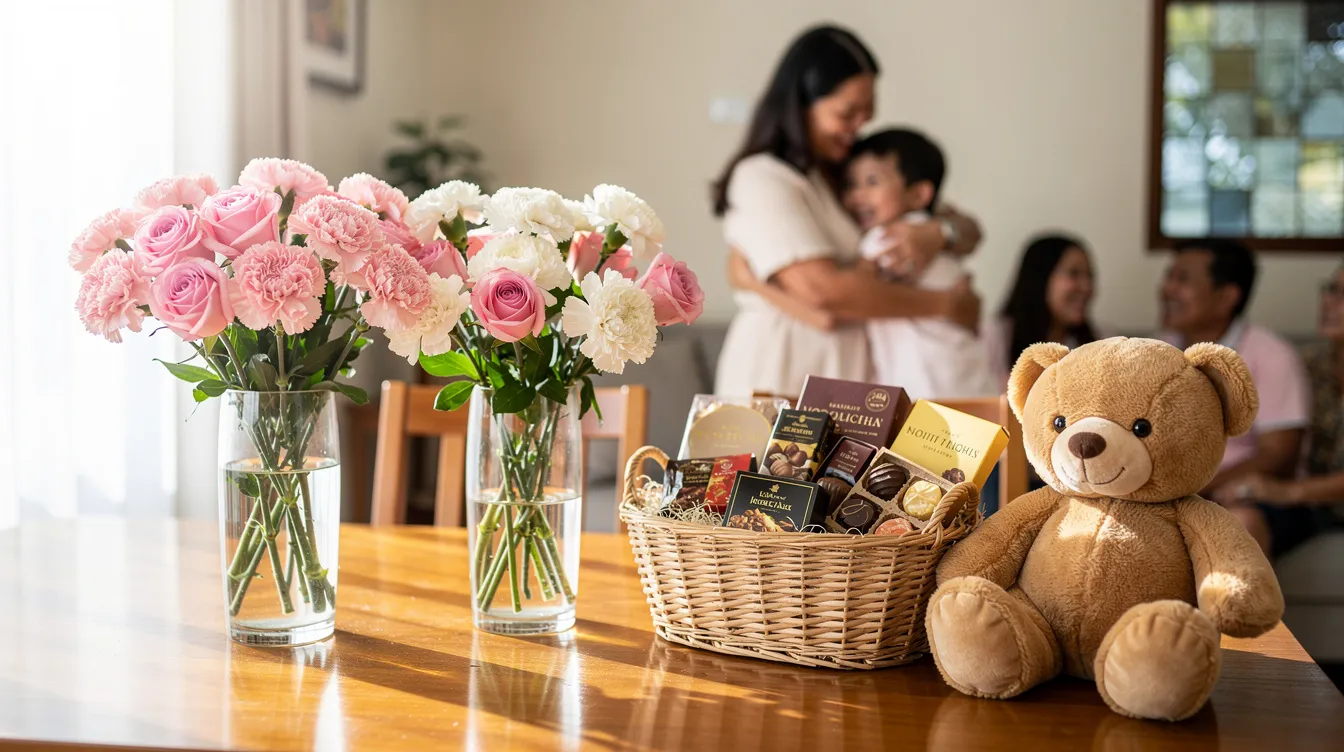
The best Mother’s Day gift ideas in the Philippines combine beauty, usefulness, and emotion. Fresh flowers remain the most timeless option because they brighten the home immediately and photograph beautifully during family gatherings. For 2026, you can explore Mother’s Day flowers and gifts early so you have more choices before peak demand begins.
If Mom enjoys sweet treats, consider chocolates, cakes, cookies, or gourmet food. If she likes surprises, choose flower and gift combos that combine blooms with chocolates, cakes, or other thoughtful extras. If she loves practical luxury, gift baskets and hampers can feel abundant and festive, especially when shared with the whole family.
For a softer and more playful gift, stuffed toys can be charming, especially when paired with flowers. Some families choose small plush items, while others go bigger with giant stuffed teddy bears for a memorable surprise. You can also add balloons, chocolates, candles, spa items, or other add-ons to make the arrangement feel more complete. The goal is to pamper Mom while making the gift feel personal, not generic.
Best Flowers to Send for Mother’s Day
Carnations are the symbolic choice, but they are not the only beautiful option. Roses communicate love and admiration. Pink roses feel gentle and graceful, red roses feel bold and affectionate, and white roses can express purity, respect, or remembrance. Mixed fresh bouquets are ideal when you want color, texture, and variety, while elaborate bouquets can make a stronger impression for mothers who enjoy grand gestures.
Lilies, orchids, tulips, and sunflowers also make excellent Mother’s Day flowers. Lilies feel elegant and fragrant. Orchids suggest refinement and lasting beauty. Tulips feel cheerful and graceful. Sunflowers bring warmth and positivity. For many Filipino households, mixed arrangements are especially practical because they look festive during family photos and can brighten the living room, dining table, or prayer area.
If you are unsure what to send, think about Mom’s personality. A sentimental mom may appreciate pink carnations and a handwritten note. A classic mom may prefer roses. A cheerful mom may love sunflowers. A stylish mom may enjoy orchids or imported roses. A mother who loves surprises may be happiest with an arrangement plus chocolates, cake, or a stuffed toy.
When Should You Order Mother’s Day Flowers?
Order as early as possible, especially if you want delivery for Sunday, May 10, 2026. Mother’s Day is a high-demand occasion, and the closer you get to the date, the more likely popular arrangements, premium roses, carnations, cakes, chocolates, and add-ons will sell out. Early ordering also gives the florist more time to prepare the arrangement carefully and schedule delivery properly.
If you need same day delivery, check cut-off times and delivery coverage before placing your order. Raphael’s Gifts notes that it offers free or same-day delivery in Metro Manila when orders are placed before 4 PM local time, and its service information describes prompt delivery throughout Metro Manila and all over the Philippines. For Mother’s Day, however, ordering early is still the safer option because demand can be much higher than on ordinary days.
For overseas senders, account for time zones. If you live in Saudi Arabia, the UAE, Hong Kong, the United States, Canada, Australia, or Europe, remember that the Philippines may be several hours ahead. Place your order based on Philippine time, not your local time, so your gift arrives when your mother is awake and the family celebration is happening.
Expressing Love: Gifts, Gestures, and Words
A gift becomes more meaningful when it comes with words. Write a heartfelt handwritten note, even if the message is short. Tell your mother what you remember, what you appreciate, and what you hope she feels on her special day. A simple “Thank you for your patience” or “I understand your sacrifices more now” can mean more than a long greeting copied from the internet.
Quality time is another powerful gift. Visit if you can. Cook if she usually cooks. Help with chores before she asks. Sit beside her and listen. Ask about her memories. Let the grandchildren sing, draw cards, or read a short message. These gestures matter because they show that Mother’s Day is not only a social media post or a delivery receipt. It is an act of presence.
Public expressions of gratitude can also be meaningful when done sincerely. A respectful Facebook post, a family photo, a tribute during lunch, or a simple greeting at church can make Mom feel honored. In Filipino culture, public honor matters because it tells the community that this woman is loved, respected, and appreciated by her family.
Where to Buy Gifts and Flowers in the Philippines
You can buy Mother’s Day gifts from local florists in major cities such as Makati, Manila, Quezon City, Pasig, Taguig, Cebu, Davao, Iloilo, Bacolod, and other urban areas. Local flower shops are helpful when you want fresh flowers, custom arrangements, and a team that understands nearby delivery routes. The advantage is personal service, especially if you have a specific color palette, flower preference, or delivery note.
Online delivery services are especially useful for overseas Filipinos. They make it possible to send flowers, cakes, chocolates, and hampers to family members in the Philippines even if you are thousands of miles away. Raphael’s Gifts has more than 20 years of experience in flower arrangement and gift baskets, works with international florists for Philippine deliveries, partners with provincial florists nationwide, offers flowers, gourmet gifts, cakes, balloons, chocolates, stuffed toys, specialty gift baskets, and provides delivery to Metro Manila, provincial areas, and international destinations.
For peak demand, choose a reputable florist with clear product photos, visible contact information, customer service support, and reliable shipping policies. Order early, write complete delivery details, include the recipient’s phone number, and prepare an alternate contact if Mom may be out for lunch or church. A beautiful gift depends not only on the arrangement but also on smooth delivery.
FAQs About Mother’s Day in the Philippines
When is Mother’s Day in the Philippines in 2026? Mother’s Day in the Philippines is commonly observed on Sunday, May 10, 2026. It falls on the second Sunday of May, which is the date most Filipinos follow for family celebrations, flower delivery, restaurant gatherings, and online gift orders.
Is Mother’s Day a public holiday in the Philippines? No. Mother’s Day is not an official public holiday in the Philippines, even though it is widely celebrated. It does not automatically mean a paid day off, special non-working day, or holiday pay. Check your employer’s policy if you need leave.
Why is there confusion about the official date? The confusion comes from several proclamations. The original date was the first Monday of December. Later presidents changed or adjusted the observance, including President Manuel Quezon, President Ferdinand Marcos, President Corazon Aquino, and former President Joseph Estrada. Social practice now strongly favors the second Sunday of May.
What is the traditional Mother’s Day flower? The traditional Mother’s Day flower is the carnation. Pink carnations are commonly associated with living mothers, while white carnations are used in remembrance of mothers who have passed away. This tradition connects Mother’s Day gift-giving with deeper symbolism.
What should I send for Mother’s Day in the Philippines? Popular choices include fresh flowers, roses, carnations, chocolates, cakes, jewelry, fruit baskets, gourmet hampers, spa gifts, handwritten notes, and stuffed toys. The best gift depends on your mother’s taste, but most mothers appreciate a thoughtful message and time with family.
Summary and Key Dates to Remember
For 2026, the date to remember is Sunday, May 10, 2026. That is the common Mother’s Day in the Philippines date because most Filipinos observe the second Sunday of May. It is the date to use for planning flowers, family meals, gift baskets, online delivery, and meaningful expressions of love.
Historically, the original date was the first Monday of December, beginning with the 1921 request from the Ilocos Norte Federation of Women’s Clubs and Governor-General Yeater’s Circular No. 33. The date later moved through several presidential proclamations: Quezon’s 1937 Parent’s Day, Marcos’ 1980 December observance for Mother’s Day and Father’s Day, Cory Aquino’s 1988 second Sunday of May and third Sunday of June framework, and Estrada’s 1998 return to the first Monday of December.
For most families, the best way to celebrate is simple: honor mothers with sincerity. Send fresh flowers, prepare a meal, gather family members, remember mothers who have passed, and thank the women who helped shape your life. Whether your gift is a bouquet of pink carnations, a box of chocolates, a basket of gourmet treats, or a handwritten note, Mother’s Day is ultimately about expressing love to the mothers, grandmothers, aunts, and other women whose care continues to light the Filipino home.


Leave a Reply
You must be logged in to post a comment.